🎶 Testimony of the Mind 🎶 – a deep dive into truth, perception, and the power of breaking free from the distractions that hold us back. This track isn’t just music—it’s a movement. A message of healing, love, and empowerment in a world full of noise.
I’m using AI as a tool for change, combining technology and consciousness to bring a new wave of music with meaning. This is for those who think deeper, who feel stronger, who seek more—this is Testimony of the Mind.
🔥 Let’s break the algorithm together! 🔥
✅ Follow & Like on Spotify – Artist Name: ZenYao
✅ Stream it. Share it. Spread the message.
✅ Tag a friend who needs to hear this.
Every like, share, and follow helps this track reach more people who need this energy. Let’s push this message forward and show the world that conscious music is here to stay!
I see you. I see the journey you’ve walked, the challenges you’ve faced, the burdens you’ve carried in silence. I see the strength in you, even on the days you felt weak. I see the love you’ve given to others, even when you struggled to give it to yourself. And today, I want you to know—you are worthy of that same love.
You have endured. You have survived moments that tried to break you, and yet here you are—still standing, still growing, still searching for the light within yourself. There were times when you doubted your worth, when the weight of the past tried to convince you that you were not enough. But you are enough. You always have been.
You have spent years carrying pain, replaying wounds that were never yours to hold. It’s time to release them. It’s time to lay down the burdens of shame, guilt, and self-doubt. They do not define you. They do not serve you. You are more than the moments that hurt you. You are the love, the resilience, the healing that comes after.
Breathe. Feel the love that exists within you. Not from the outside, not from validation or approval, but from you. You are your own source of love, your own safe space. Wrap yourself in the warmth of your own embrace, knowing that the only permission you’ve ever needed to heal, to be free, to love yourself—was your own.
Forgive yourself. For the times you didn’t know better. For the times you gave too much. For the times you abandoned yourself to please others. You are learning. You are evolving. You are finding your way home—to you.
From this moment forward, may you walk lighter. May you release the past and step into the love that has always been yours. May you speak to yourself with kindness, hold yourself with compassion, and remind yourself daily: I am worthy. I am loved. I am free.
“Good day! Healing isn’t about ‘fixing’ yourself—it’s about treating yourself with kindness along the way. Self-compassion makes transformation easier and more sustainable.”
Activity: “Write a love letter to yourself today. Acknowledge how far you’ve come, and remind yourself that you’re worthy of kindness and patience.”
Quote: “Talk to yourself like you would to someone you love.” – Brené Brown
Call to Action: “What’s one kind thing you can say to yourself today? Let’s create a self-compassion thread!”
“Hello! Just like decluttering a room makes space for new things, we must clear our inner space to welcome new energy. What do you need to clear out to make space for what’s next?”
Activity: “Today, clean or rearrange one small space in your home. As you do, set an intention to make room for new possibilities in your life.”
Quote: “Sometimes, the best way to move forward is to leave something behind.” – Unknown
Call to Action: “What’s one small thing you can clear out today—physically or emotionally? Let’s create space together!”
Living with the awareness that everything is energy brings a level of clarity that removes the need for unnecessary debate. Instead of viewing things through subjective opinions or arguments, we begin to recognize life in terms of what adds to or depletes our energy.
The Power of Energy Awareness
Everything we consume—physically, mentally, and emotionally—either nourishes us or drains us. This applies to:
Food & Nutrition: Whole, nutrient-dense foods provide energy, while processed, artificial foods often deplete it. Eating a fresh meal leaves you feeling vibrant, while consuming excessive junk food can make you feel sluggish.
Social Interactions: Some people uplift and inspire us, while others drain our energy through negativity, gossip, or emotional manipulation. Pay attention to how you feel after spending time with someone—do you feel lighter or heavier?
Information & Media: What we watch, listen to, and read affects our mental state. Uplifting and educational content can spark inspiration, while excessive news, social media, or toxic entertainment can drain focus and create anxiety.
Thoughts & Emotions: Negative self-talk, fear, and worry deplete energy, while gratitude, mindfulness, and positive thinking restore and strengthen it. Your internal dialogue has just as much impact as external influences.
Deciphering Energy Through Feelings
Your emotions and body are always giving you feedback. If something leaves you feeling drained, anxious, or overwhelmed, it’s likely depleting your energy. If it leaves you feeling motivated, calm, or at peace, it’s adding to your vitality.
By consciously observing these shifts, you gain the ability to make choices that support your well-being. Instead of reacting blindly, you become intentional about what you allow into your life—protecting your energy and aligning yourself with what truly serves you.
Final Thought
Energy doesn’t lie. When we stop arguing about what is “right” or “wrong” and instead focus on how things make us feel, we gain a clear guide for living in balance. Pay attention, make adjustments, and choose wisely—because what you consume, mentally and physically, shapes the energy you carry through life.
“Good day! The fear of the unknown often stops us from moving forward. But what if uncertainty isn’t something to fear, but something to trust? The unknown is where all possibilities exist.”
Activity: “Close your eyes and take 5 deep breaths. Visualize yourself stepping forward with confidence, even without knowing what’s next. Repeat to yourself: ‘I trust where life is leading me.'”
Quote: “Faith is taking the first step even when you don’t see the whole staircase.” – Martin Luther King Jr.
Call to Action: “What’s one way you remind yourself to trust life’s unfolding path? Share your wisdom with us!”
Since last week focused on letting go, this week will continue the healing journey by embracing change and renewal. Letting go creates space, and now it’s time to step into new energy, trust transformation, and cultivate inner renewal.
Each day will guide you through accepting change, embracing uncertainty, and creating new beginnings—physically, emotionally, and spiritually.
Monday: Embracing Change as Growth
“Happy Monday! Change is not something to fear—it’s a sign that you’re growing. When we resist change, we hold onto old versions of ourselves. This week, let’s shift our perspective and embrace change as an act of self-evolution.”
Activity: “Think of a recent change in your life. Instead of seeing it as a loss or disruption, write down three ways this change is helping you grow.”
Quote: “Change is the essence of life; be willing to surrender what you are for what you could become.” – Reinhold Niebuhr
Call to Action: “What’s one change in your life that has helped you grow? Share in the comments to inspire others.”
“Happy Sunday! Reflection helps us recognize what we’ve let go of and what we’re ready to release next. Let’s celebrate our progress and set intentions for a lighter, freer week ahead.”
Activity: “Jot down one thing you successfully let go of this week and one thing you’d like to release next. Reflect on how this has shifted your energy.”
Quote: “The more you let go, the higher you rise.” – Unknown
Call to Action: “What’s one thing you’ve let go of this week? Let’s celebrate each step toward freedom together.”
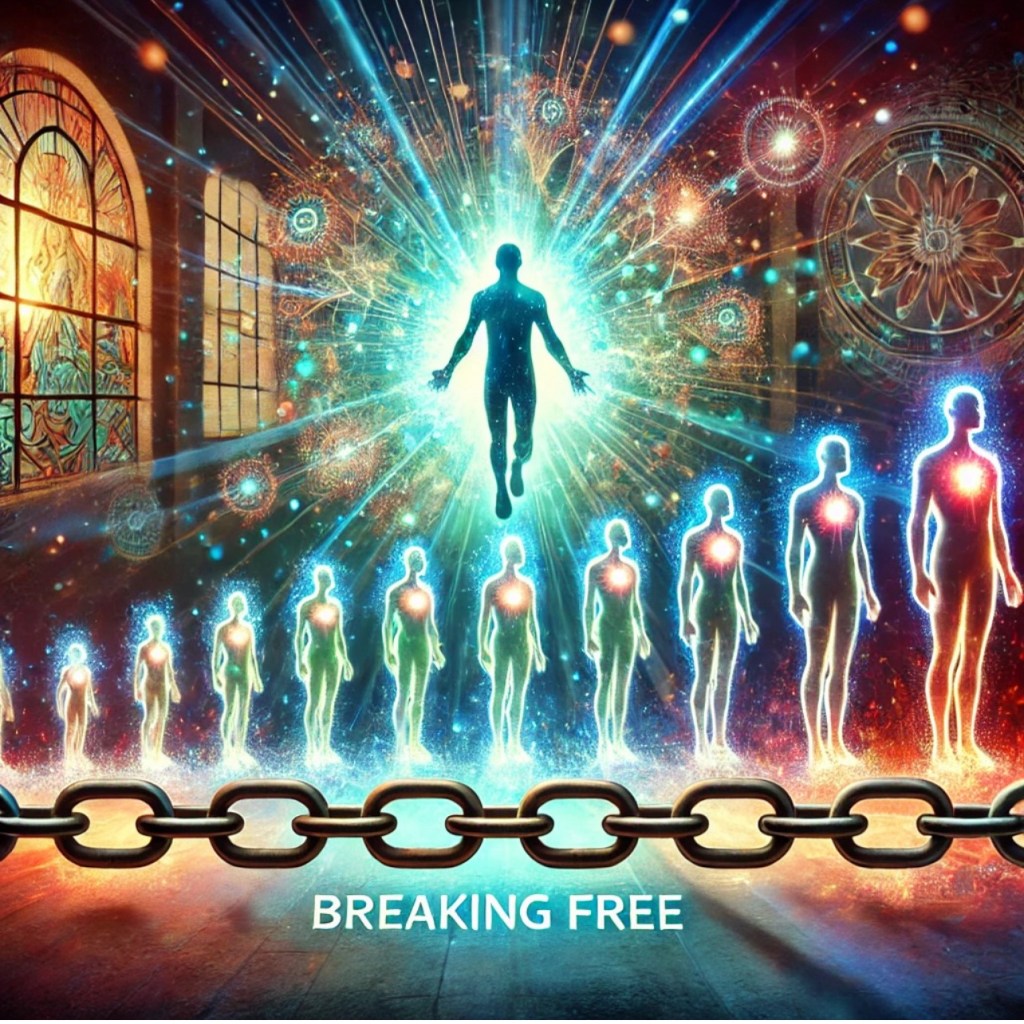
Pain is often an unseen inheritance—passed down from generation to generation, shaping families in ways we don’t always recognize. Many of us come from families where it’s easier to act like nothing happened than to confront the wounds that linger beneath the surface. But the truth is, pain doesn’t disappear just because we ignore it. It stays, repeating patterns in different forms until someone is willing to face it, feel it, and break the cycle.
Healing is a courageous act—one that requires acknowledging the pain rather than suppressing it. It is in this process of feeling, understanding, and releasing that we begin to manifest a life of peace, love, and emotional freedom.
How Generational Pain is Passed Down
Emotional wounds, trauma, and unprocessed grief are often carried forward through learned behaviors, beliefs, and coping mechanisms. If past generations didn’t have the tools to process their pain, they unknowingly passed it down through:
1. Unspoken Pain & Suppression
Many families operate under the belief that “we don’t talk about that.”
Avoidance creates a pattern where pain is ignored instead of healed.
Emotional suppression can lead to anxiety, depression, or disconnection in future generations.
2. Conditioned Behaviors & Emotional Reactions
Children absorb the emotional patterns of their parents.
If past generations responded to hardship with anger, avoidance, or numbing, their children may adopt the same habits.
Without awareness, these cycles repeat unconsciously, shaping relationships and self-worth.
3. Fear of Vulnerability & Emotional Expression
Many people grew up hearing “toughen up” or “stop crying.”
Emotional repression leads to a lack of emotional intelligence and difficulty forming deep connections.
Healing requires relearning how to feel without shame.
Healing the Generational Wounds
Breaking the cycle is not easy, but it is possible. Healing starts with awareness, intention, and action. Here’s how:
1. Acknowledge the Pain Without Judgment
Healing doesn’t mean blaming past generations—it means recognizing patterns so they don’t continue.
Reflect on questions like:
What emotional patterns did I inherit?
What wounds have been passed down in my family?
Understanding is the first step toward transformation.
2. Allow Yourself to Feel
Pain needs to be felt before it can be released.
Suppressed emotions don’t go away—they manifest as stress, anger, anxiety, or disconnection.
Give yourself permission to grieve, to cry, and to release what has been buried for too long.
3. Break the Silence & Speak the Truth
Many generational wounds exist because they were never spoken about.
Have honest conversations about pain and healing, even if past generations never did.
If family members are unwilling, journaling, therapy, or self-reflection can help release the weight of unspoken pain.
4. Learn New Coping Skills
Healing requires unlearning old patterns and creating healthier ones.
Introduce practices like:
Mindfulness & Meditation: Becoming present with your emotions.
Journaling: Processing thoughts and emotions safely.
Breathwork & Somatic Healing: Releasing stored trauma in the body.
5. Embrace Forgiveness & Compassion
Forgiveness doesn’t mean excusing harm—it means releasing the hold pain has over you.
Understand that past generations did the best they could with the knowledge they had.
Forgiveness is a gift you give yourself—one that sets you free.
Manifesting a Life of Peace and Positivity
Healing is not just about ending pain—it’s about creating a new way of being. When we process our emotions and break free from generational cycles, we step into a space of peace, love, and conscious living.
✔ We learn to respond instead of react. ✔ We cultivate relationships based on emotional awareness, not wounds. ✔ We build a foundation of love, truth, and wholeness for future generations.
It all begins with the decision to heal.
Final Thought: Be the One Who Breaks the Cycle
Not everyone in your family may understand your journey, and that’s okay. Healing is a personal path—one that takes strength, patience, and deep self-awareness. But as you heal, you not only free yourself, you free future generations from inheriting the same pain.
You are the cycle breaker. You are the shift.
Will you choose to feel, heal, and create a new path forward?



 NO LABELS JUST HUMAN