Poker Is My Life

I’m processing out loud.
Poker feels like chess with cards. It is strategy, patience, awareness, and emotion all moving at once.

Lately, I have been paying closer attention to life. Everything is always moving. Life flows through moments, interactions, and situations. What we experience often depends on how we understand it and how we communicate it. Awareness changes everything, and I feel more aware now than ever.

One of the most intense things I am processing is the recent lost of my place of work at Lodge Card Club. That place was more than a job. It was a community built by people who share a common interest. We came together around something that does not harm anyone, yet it is often judged, labeled, and misunderstood.

Poker is just a game, but the meaning is flexible. Depending on who you ask, it can be seen in completely different ways. That is the power of perception.

For me, it was a place where I could earn a living without feeling stressed or uncomfortable. It was not an environment filled with anger or division. It was a space where people connected. Yes, there was competition. Yes, there were moments of intensity. That is part of the game. But underneath it all was respect and shared purpose.

People from many different backgrounds came together there. Different cultures, beliefs, and life paths all met at one table. We competed, we learned, and we grew. Winners were celebrated, not used to put others down. Many of us asked questions, studied, and supported each other in becoming better.

At the same time, if you look at the world around us, there are so many things happening that feel heavy. Things that make it hard for people to even want to face the day. Yet systems and decisions continue to be made by individuals who hold power, and those decisions can deeply affect others.

I have seen people speak on situations just to be heard, without fully considering the impact on real lives. I worked with these people. We had differences, but this place gave us something meaningful. It created opportunity. It gave us a sense of belonging.

Now that it is gone, there is frustration. Not from wishing harm on anyone, but from wishing that people could truly see what this community was. A real group of humans who love the game of Texas Hold’em. A game that holds meaning for so many of us.

There was a time when I hesitated to tell people I was a poker dealer or a player. But looking back, poker shaped who I am. The ups and downs, the emotional swings, the discipline, and the resilience all became part of me. More than that, the connections I built with people are something I will always value.

I am still trying to understand this world. It is difficult to accept that something meaningful can be taken away based on perception, opinion, or misunderstanding rather than clear truth.

Not every place or system is perfect. There will always be flaws. But from what I experienced, this was a community that was doing its best to operate with structure and purpose. It was people bringing a game to life in a positive way.

I hope that anyone reading this can feel where I am coming from. This is just one human sharing something that brought peace and balance into their life.

There are many things in this world that could use attention and change. I am learning to place my energy into what I believe in, rather than what I cannot control.

This experience is a lesson, but it is also something I will continue to stand for. Not based on emotion alone, but on truth. If something is wrong, it should be clearly shown and proven. Not assumed.

I understand that poker comes with wins and losses, and that can shape how people view it. But beyond that, it is a game, a craft, and for many of us, a community that means more than words can fully explain.

Isn’t life a game too.
We move through wins and losses, learning, adapting, and growing with every step. We all chase something that gives our journey meaning. The last thing any of us needs is someone else deciding how that journey should be lived.

everyone #together #support #poker #love #lodgepokerclub

Just Human

There are moments where the mind feels heavier than the body.

Not because of anything you can physically touch, but because of everything you’re carrying internally. Thoughts looping. Questions without answers. A quiet pressure that doesn’t always have a clear source. It repeats like a song you didn’t choose, playing in the background of your awareness.

You try to make sense of it.
You try to push through it.
Sometimes you even try to ignore it.

But it’s still there.

For many, this isn’t an isolated experience. It’s a reflection of something deeper. Something shared. A kind of collective weight that has built over time. We live in a world where information is constant, comparison is normalized, and competition is woven into daily existence. Systems exist. Structures exist. Expectations exist.

But clarity feels harder to find.

There’s a growing awareness that while everything appears to be moving forward, something within the human experience feels unchanged. Repetitive. Cyclical. The same promises. The same patterns. The same pressures, just dressed differently.

And in the middle of it all, there you are.

Trying to understand.

Trying to navigate.

Trying to exist in a way that actually makes sense.

So the question becomes
Is something wrong with you or are you finally seeing clearly

Because when you slow it down and observe without attachment, something shifts. The chaos doesn’t disappear, but your relationship to it changes.

You begin to notice that much of what feels overwhelming isn’t just coming from within. It’s being absorbed. Through screens. Through conversations. Through environments that are constantly projecting urgency, fear, comparison, and noise.

Over time, that builds.

And without awareness, it starts to feel like identity.

But here’s where something powerful emerges

You are not your reaction
You are the one observing it

That distinction changes everything.

Because if you are the observer, then there is space.

And in that space, there is choice.

Not control over everything happening around you, but control over how you meet it.

That doesn’t mean denying struggle.
It doesn’t mean pretending things are easy.
It doesn’t mean ignoring the realities of rising costs, uncertainty, pressure, or responsibility.

Those are real.

But so is your ability to respond with intention instead of reaction.

And that’s where empowerment lives.

Not in escaping the world.
Not in fighting everything at once.
But in how you choose to exist within it.

There’s a natural pull toward collective action. To connect, to build, to speak, to challenge what feels misaligned. And that can be powerful. Community can amplify awareness, support, and change.

But even that requires balance.

Because if you lose yourself while trying to fix everything, you become another form of depletion.

So the path becomes both

Engage, but don’t dissolve yourself
Care, but don’t carry everything
Contribute, but remain grounded in your own well being

This is not about withdrawing from life.
It’s about participating with awareness.

And that awareness becomes your anchor.

You begin to see that existence isn’t divided into good or bad, positive or negative. It’s all present. Growth and fear. Clarity and confusion. Stillness and chaos.

Both exist.

But your attention determines what expands within your experience.

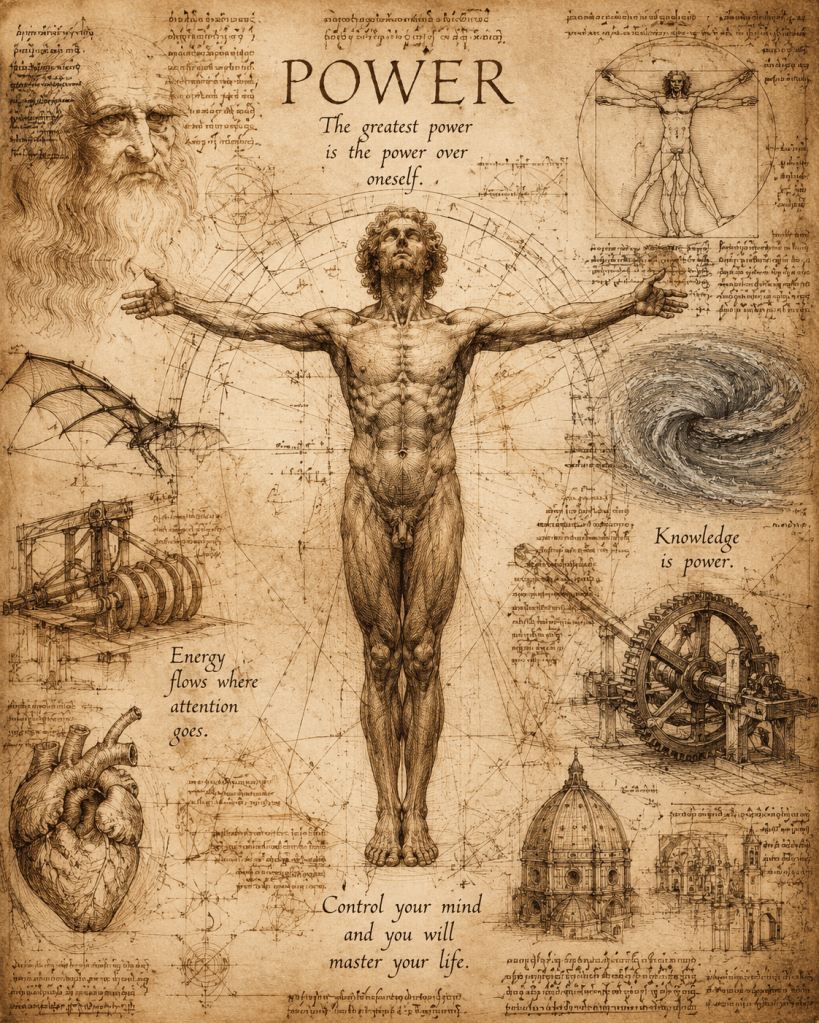
Where attention goes, energy follows.

So if you constantly feed the noise, the noise grows.
If you constantly feed fear, fear grows.
If you constantly feed comparison, comparison grows.

But if you begin, even slightly, to feed awareness, presence, and intention, something else starts to grow too.

Not overnight.

Not perfectly.

But consistently.

And in that consistency, something becomes clear

You don’t need to solve existence to live it well.

You don’t need all the answers to move forward.

You don’t need certainty to act with intention.

You just need to recognize this moment for what it is

The only place your power exists

Right here.

Not in yesterday’s confusion
Not in tomorrow’s uncertainty
But in how you choose to meet what’s in front of you now

Maybe that looks like pausing before reacting.
Maybe that looks like choosing calm in the face of aggression.
Maybe that looks like listening instead of escalating.
Maybe that looks like stepping away from overstimulation and returning to yourself.

These aren’t small things.

They are foundational shifts.

Because while the world may feel loud, fast, and overwhelming, your internal state does not have to mirror that.

You can be steady in the middle of movement.
You can be clear in the middle of confusion.
You can be intentional in a world that often runs on reaction.

And when you live that way, not perfectly, but consciously, you become more than someone navigating life.

You become an example of what it looks like to be present within it.

Not fixed
Not flawless
Not fully figured out

Just aware

Just choosing

Just human

The Foundation of a Healthy Relationship: Responsibility Before Reaction

A healthy relationship does not begin with changing your partner — it begins with understanding yourself.

Many conflicts in relationships come from a simple but overlooked pattern: when we feel uncomfortable, hurt, or triggered, we look outward for the cause. We blame words, tone, actions, or past experiences tied to the other person. While these moments feel very real, they often mask something deeper — an internal emotional response that has not yet been understood or regulated.

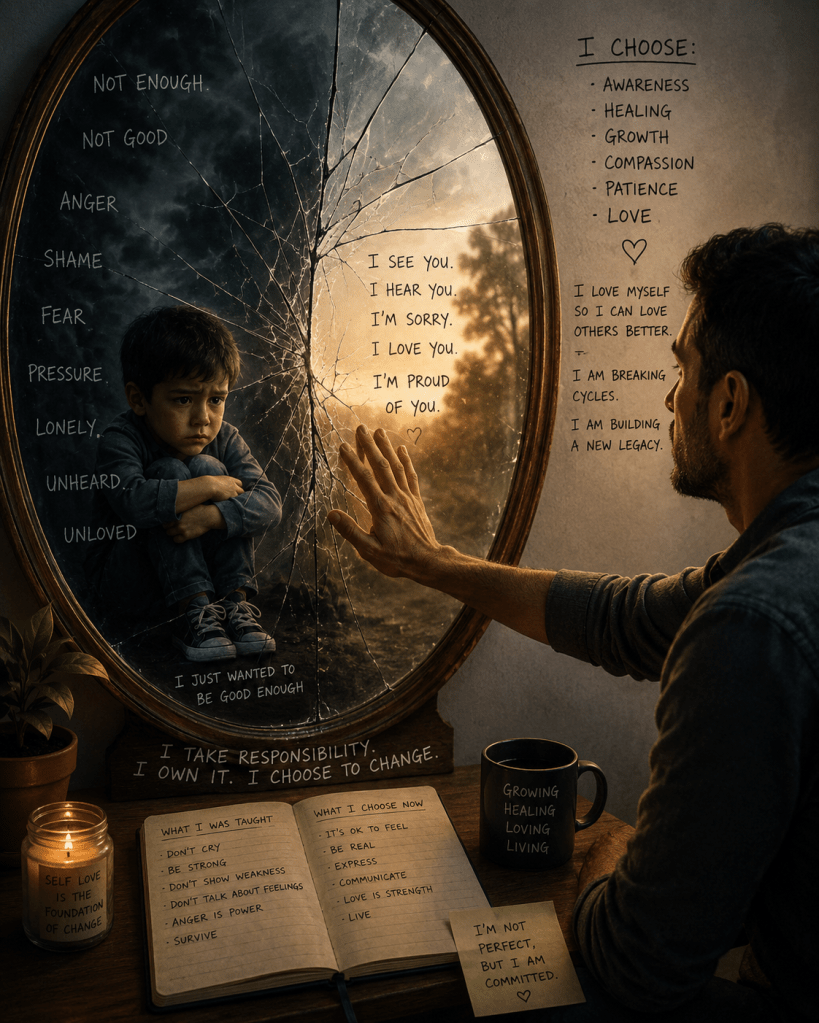
A sustainable relationship requires emotional responsibility. This means recognizing that if I don’t feel good, the first place to look is within myself, not immediately toward my partner.


Emotional Regulation Over Emotional Reaction

Emotional regulation is the ability to pause, observe, and process what we’re feeling before reacting. This does not mean suppressing emotions or denying pain. It means taking ownership of how emotions are handled.

When we react impulsively:

  • We escalate conflict.
  • We project unresolved pain.
  • We turn partners into emotional targets rather than allies.

When we regulate:

  • We create space for understanding.
  • We communicate instead of accuse.
  • We allow growth rather than defense.

Healthy partners learn to say:

“Something inside me feels activated — let me understand it before I respond.”


The Japanese Perspective: Self-Reflection Over Blame

This approach aligns closely with a Japanese introspective practice known as Naikan (内観), which means “inside looking.”

Naikan encourages individuals to reflect inward by asking:

  1. What have I received?
  2. What have I given?
  3. What difficulties have I caused?

Rather than asking, “What did they do to me?”
The focus becomes, “What is happening inside me?”

This mindset reduces blame, softens judgment, and builds accountability — not through shame, but through awareness.


Healing Emotional Turmoil Without Accusation

Many emotional reactions in relationships are not caused by the present moment alone. They are often echoes of:

  • Unresolved childhood experiences
  • Past relationship wounds
  • Learned patterns of defense or avoidance

When we accuse others for how we feel, we avoid healing what’s actually asking for attention inside us.

Acceptance does not mean tolerating harm.
It means acknowledging:

  • “This feeling is real.”
  • “This feeling is mine to understand.”
  • “I can respond without attacking.”

Healing begins when we stop fighting our emotions and start listening to them.


Responsibility Creates Safety

When both partners practice emotional responsibility:

  • Trust deepens.
  • Communication becomes calmer.
  • Conflict turns into collaboration.

A relationship becomes a space where two people grow together — not by fixing each other, but by supporting self-awareness in one another.

The shift is simple, but powerful:

From blame → to curiosity
From accusation → to understanding
From reaction → to regulation


The Core Truth

A healthy relationship is not built on who is right or wrong.
It is built on two people willing to look inward, take responsibility for their emotional state, and meet each other with honesty and compassion.

When we accept ourselves, we stop demanding others to carry our unresolved pain.

And that is where real connection begins.

Your words are making you sick… literally?

There’s a reason certain phrases—“I feel sick,” “My body is falling apart,” “I’m old,” “I always get headaches”—can seem to pull symptoms closer. It’s not magic. It’s a well-studied mind–body phenomenon: expectation can shape biology.

That phenomenon has a name: the nocebo effect—the “negative placebo.” It describes real symptoms or worse outcomes that occur because someone expects harm, often triggered by fear, suggestion, or the way information is framed. 

What the nocebo effect actually is

A nocebo response can show up as pain, nausea, dizziness, fatigue, itching, and other symptoms—even when a “treatment” is inert—because the brain predicts a negative outcome and the body responds accordingly. Researchers describe mechanisms like expectationlearning/conditioning, and negative suggestions (especially in medical contexts). 

A simple example: two people get the same injection, but the person who’s warned “this will hurt” often reports more pain than someone given a calmer framing—same stimulus, different expectation. 

“Your body obeys your voice” — what science supports (and what it doesn’t)

The strongest scientific version of this idea is:

  • Words can change expectations.
  • Expectations can change attention, interpretation of sensations, and stress physiology.
  • Stress physiology can influence immune function and inflammation over time.

That’s psychoneuroimmunology: how mind, brain, hormones, and immune signaling interact. 

Where people often overstate it is the timeline and certainty—e.g., “saying ‘I’m sick’ releases a cascade of cortisol that depresses your immune system in minutes.” Acute stress can raise cortisol (often peaking after a short delay), and chronic stress is more consistently linked with immune suppression, but the “minutes” claim is too absolute and doesn’t fit the broader evidence base. 

How negative self-talk can become a stress amplifier

Your brain is a prediction engine. When you label yourself with threat language (“I’m breaking down,” “I’m always sick”), you can unintentionally:

  1. Prime threat detection (hypervigilance to bodily sensations)
  2. Increase symptom scanning (“Is my throat scratchy? Am I getting sick?”)
  3. Interpret normal sensations as danger
  4. Trigger stress arousal (fight/flight physiology)
  5. Reinforce the loop (“See? I knew it.”)

That loop is a common pathway by which nocebo effects become sticky—especially if you’ve had past experiences that trained your brain to expect problems. 

The goal isn’t “positive vibes.” It’s accurate, regulated language.

You don’t need to deny reality. You just want language that reduces threat while staying honest.

Instead of:

  • “I’m getting sick.”
    Try:
  • “I’m noticing symptoms. I’m going to rest, hydrate, and monitor.”

Instead of:

  • “I’m old—everything hurts.”
    Try:
  • “My body needs more recovery and movement. I can support it.”

Instead of:

  • “My anxiety is ruining me.”
    Try:
  • “My nervous system is activated. I can help it settle.”

This kind of reframe doesn’t pretend symptoms aren’t real. It changes the meaning your brain assigns to them—often the difference between a calm response and a spiral. (This is also why clinician wording matters so much.) 

A practical “anti-nocebo” script (30 seconds)

When you catch yourself using threat language, try this:

  1. Name: “I’m noticing a worry story.”
  2. Normalize: “My brain is trying to protect me.”
  3. Ground: “What’s true right now in my body?”
  4. Choose: “What’s one supportive action I can take?”

This shifts you from identity (“this is me”) to observation (“this is a moment”), which is where regulation lives.

Important reality check

  • The nocebo effect is real, but it doesn’t mean illness is “all in your head.”
  • If you have persistent or severe symptoms, get medical care.
  • Think of language as a volume knob on stress and symptom experience—not an on/off switch.

The Power of Habit

We are habitual beings. Most of what we do each day isn’t conscious it’s driven by repetition. The thoughts we think, the reactions we have, and the routines we follow slowly become patterns. And those patterns eventually shape our reality.

Every repeated thought strengthens a neural pathway. Every repeated behavior reinforces a habit. Over time, the mind and body begin to operate on autopilot.

This is why people often feel “stuck”not because life is against them, but because their nervous system is running familiar programs.

Habit creates identity.

Identity creates choices.

Choices create outcomes.

That’s how reality is built.
But there’s another layer we don’t talk about enough.

The constant projections from TV, social media, and news cycles directly influence our nervous system.

When we consume fear-based content, violence, outrage, and division daily, it doesn’t just stay on the screen it enters the body. It shapes how we think, how we feel, and how we respond to the world.

This stimulation keeps the nervous system in survival mode.

If we are not conscious or responsive beings, we become reactive ones.
We absorb what we repeatedly watch.

The brain doesn’t clearly separate lived experience from visual input. So when we constantly expose ourselves to chaos, conflict, and crisis, our body begins to mirror that state internally.

This leads to impulsive behavior, emotional volatility, anxiety, and disconnection.

People then react instead of respond.

They snap quicker.

They judge faster.

They argue harder.

They feel overwhelmed without knowing why.

Not because they are broken but because they are overstimulated.

Change doesn’t happen through motivation alone.
It happens through awareness and repetition.

Small, intentional shifts compound over time:

choosing calm instead of impulse

choosing reflection instead of reaction

choosing presence instead of constant stimulation

This is the foundation of everything I share. Not perfection ,awareness. Not judgment, responsibility. Not control conscious choice.

We don’t become free by forcing change.

We become free by noticing patterns both internal and external and choosing differently.

That’s how we evolve.
One thought.
One habit.
One moment at a time.

Artificial Fuel: The Silent Trade We Keep Making

We are living in an age where nearly everything is being sold to us as relief.

Not real relief.
Not true peace.
But artificial fuel quick hits of stimulation disguised as pleasure, freedom, or connection.

And the scary part?

Most people don’t even realize it’s happening.

We don’t question it because it feels normal. It’s everywhere. It’s promoted. It’s embedded into culture. It’s presented like a reward for simply surviving the day.

But if you look closely, a painful truth begins to show itself:

We are not consuming these things because life is good.

We are consuming them because something inside us is hurting.


Pleasure Isn’t the Enemy Escaping Ourselves Is

The issue isn’t pleasure.

Pleasure is natural. It’s part of being alive. It can even be healing.

The issue is when pleasure becomes a substitute for what we truly need.

When we don’t know how to sit with our emotions…
When we feel empty and don’t know why…
When we carry loneliness, stress, rejection, grief, or exhaustion…

We reach for the fastest solution.

Not because we’re weak.

But because we’re human and many of us were never taught how to process pain.

So we medicate the soul.

And we call it “fun.”


The Products of Escape Sold as Comfort

Some of the most common forms of artificial fuel are marketed as innocent, even normal:

Porn = loneliness sold as sex

Not always, but often it becomes a replacement for real intimacy.
A shortcut to dopamine when love feels distant.

Alcohol = escape sold as fun

The world calls it “a good time,” but many people are really drinking to stop feeling.

Drugs = numbness sold as peace

A fake quietness. A temporary silence.
But the pain always comes back.

Scrolling = distractions sold as rest

Not true rest. Not real restoration.
Just endless noise so we don’t have to hear ourselves think.

Fast food = poison sold as pleasure

Short satisfaction that costs long-term health — but marketed as a treat.

Smoking = addiction sold as relaxation

A ritual people cling to because it gives the body something to hold onto.

Luxury = emptiness sold as purpose

The illusion that looking successful will finally make us feel whole.

Notifications = control sold as importance

A constant tug on our attention, training us to believe:
“If I don’t respond, I don’t matter.”

Social media = validation sold as friendship

A world of likes and reactions…
but not always love, not always support, not always real connection.

And maybe the clearest message of all is this:

Don’t feed the best parts of being human with artificial fuel.


The Real Addiction Is Not the Substance It’s the Avoidance

Most people are not addicted to the thing.

They are addicted to what the thing provides:

  • an escape from anxiety
  • a break from loneliness
  • a pause from stress
  • a moment of “feeling enough”
  • a distraction from depression
  • a replacement for connection
  • a quick feeling of power

That’s why quitting is hard.

Because when you remove the artificial fuel…
you finally meet the pain you were running from.

And most of society has trained people to run from pain not understand it.


A World Built to Keep You Distracted

The modern world profits off your attention.

It profits off your impulses.
It profits off your insecurity.
It profits off your loneliness.
It profits off your cravings.
It profits off your trauma.
It profits off your wounds.

If you stay distracted, you stay consuming.

If you stay consuming, you stay controllable.

So they keep pushing the message:

  • “Treat yourself.”
  • “You deserve this.”
  • “Just one more.”
  • “This will make you feel better.”

And for a moment… it does.

Until it doesn’t.

Until you wake up again, still empty, still tired, still unsure of who you are.


What We Actually Need Can’t Be Bought

Real healing is not sold in a bottle.
Not found in a screen.
Not purchased with money.
Not delivered through a notification.

What we truly need is:

  • emotional clarity
  • self-acceptance
  • genuine connection
  • purpose
  • self-trust
  • nervous system peace
  • real presence
  • love without performance

That is the fuel of the soul.

That is what restores the human being.


The Revolution Is Returning to Yourself

The strongest thing a human can do today…

is slow down.

To sit with themselves.
To face what they feel.
To stop running from their own inner world.
To stop outsourcing their happiness.

Because once you learn how to sit with your emotions…
you stop needing to escape them.

Once you find peace within…
you stop chasing pleasure like it’s survival.

Once you understand who you are…
you stop feeding your life with artificial fuel.


Closing Reflection

We don’t need to shame ourselves.

This isn’t about judgment it’s about awareness.

Because the moment you become aware…

you take your power back.

And you realize:

You were never broken.
You were never weak.
You were just trying to survive in a world that taught you to escape instead of heal.

But now, you can choose differently.

Now, you can choose clarity.
Now, you can choose presence.
Now, you can choose love.

Because the best parts of being human deserve real nourishment.

Not artificial fuel.

ATTENTION, ATTENTION: The War for Your Focus

Look around.

Every channel. Every platform. Every headline. Every scroll.
In today’s world, attention is the currency, and we are living inside a system designed to pull it away from us.

Our attention is being distracted.
Directed.
Manipulated.
And as a species, we’re being picked apart emotionally, mentally, and spiritually.

That’s why I truly believe this:

It is our individual responsibility to wake up.

To educate ourselves.
To learn how to exist with awareness.
To evolve.
To understand.
To embrace the moment with intention.

Because if we don’t protect our focus… the world will choose what we focus on for us.


Choosing Love Is a Form of Revolution

Let me explain what I mean in a real-life way:

If someone cuts you off in traffic
don’t take it personal.

Don’t instantly hit the horn.
Don’t instantly react with frustration.

Because the truth is… they’re probably rushing somewhere.
They’re human too.
And most likely, they didn’t do it to attack you.

That’s the part we forget:

Not everything is about us.

A lot of what we experience is simply the collision of human lives moving too fast.

And when we get impulsive and reactive, we add fuel to the fire.


The Hidden Truth Behind People’s Outbursts

If someone screams at you… at the top of their lungs…

Why do we scream back?

Usually because something inside of us gets triggered.
Because we’re taking it personally.
Because frustration already exists inside us and their emotion becomes the spark.

But here’s the real question:

Do we ever truly know what brought that person to that breaking point?

No.

We don’t know what they’re dealing with.
We don’t know what pain they’ve carried.
We don’t know what they’re fighting silently.

Yet we’re quick to judge. Quick to label. Quick to attack back.

And this is one of the biggest challenges of human existence.


Life Is an Obstacle Course But We Decide How We Move Through It

Obstacles are everywhere.

But they aren’t here to destroy us.
They’re here to shape us.

The goal isn’t to avoid challenges…

The goal is to move through them in a healthy way.

Because every moment gives you a choice:

  • react with impulse
    or
  • respond with consciousness

And the more we choose patience…
the more we choose calm…
the more we choose love…

the more we create a ripple in the world.


Energy Is Everything

Energy is everything we do.
Every thought. Every word. Every reaction. Every choice.

We conserve energy.
We spend energy.
We recharge energy in many different ways.

That’s why slowing down is powerful.

Enjoying moments is powerful.
Giving yourself space is powerful.
Not pushing constantly is powerful.

Sometimes the greatest healing is simply learning how to be here.


Why I Share This

This is what I continue to learn.
And I share it as I grow.

My goal is simple:

To create connection with humans who are also healing.

Humans who want peace.
Humans who want to live from love instead of fear.
Humans who want to stop living in survival mode.

I’m still healing emotional wounds I’ve carried for far too long.

And I share what helps me in real time
as I learn it.

I don’t claim to have all the answers.

But I do know this:

Love is the way forward.

And healing begins with where we place our attention.

Choosing Gratitude, Choosing Presence

Grand rising.
Today begins with gratitude.

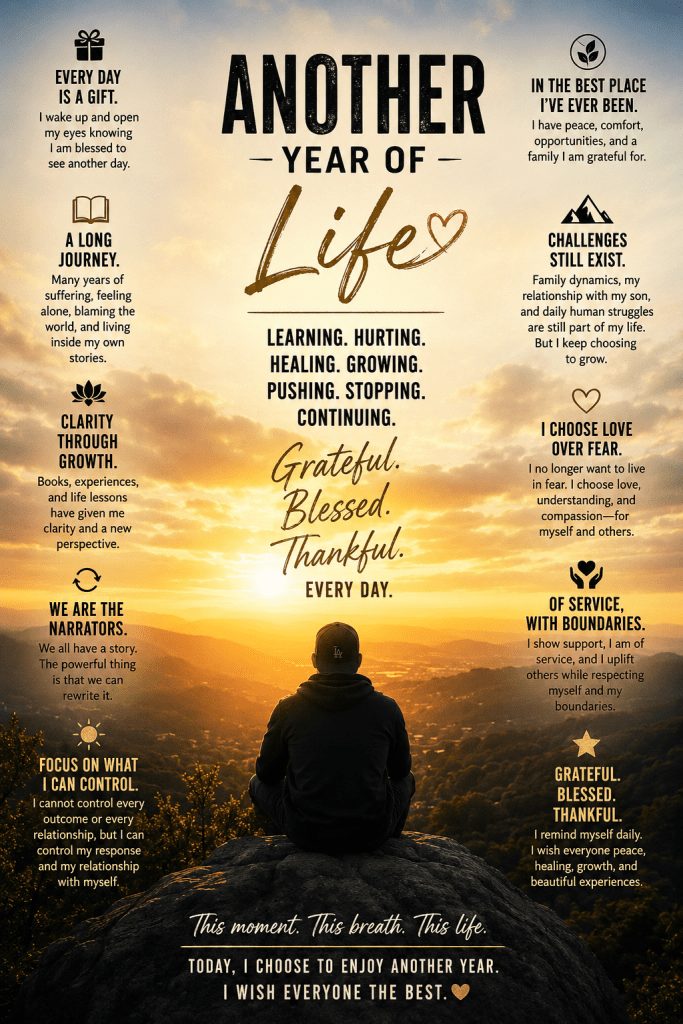
I’m grateful to open my eyes. Grateful for my body and the organs that sustain life. Grateful for my home, my family, and the peace that now lives within me. I’m grateful for choosing love over fear. I’m grateful for the ability to walk through life moment by moment, aware and present.

I’m grateful for movement for exercise that strengthens both my body and mind, building resilience through healthy challenge. I’m grateful for the lessons life continues to offer, for the pauses that slow me down, and for learning how to respond instead of react. I’m grateful for the education I continue to receive, and for the simple gift of existing.

What I’ve come to understand is this: when I consciously shift my thoughts toward gratitude, my experience of life changes. Gratitude reshapes perception. Repeated thoughts become patterns, patterns become habits, and habits shape the life we live. When I choose gratitude, I begin to see life not as something happening to me, but as something unfolding with me.

I share from a place of honesty. I know the darkness I once lived in. I remember the loneliness, the search for validation, the moments of confusion and disconnection. Healing hasn’t meant erasing those experiences it has meant understanding them, learning from them, and allowing them to guide me toward greater awareness.

This platform is a space for connection. A place to share growth in real time. A place to find others who are learning to exist with intention, awareness, and compassion. The goal is not perfection, but presence not superiority, but understanding.

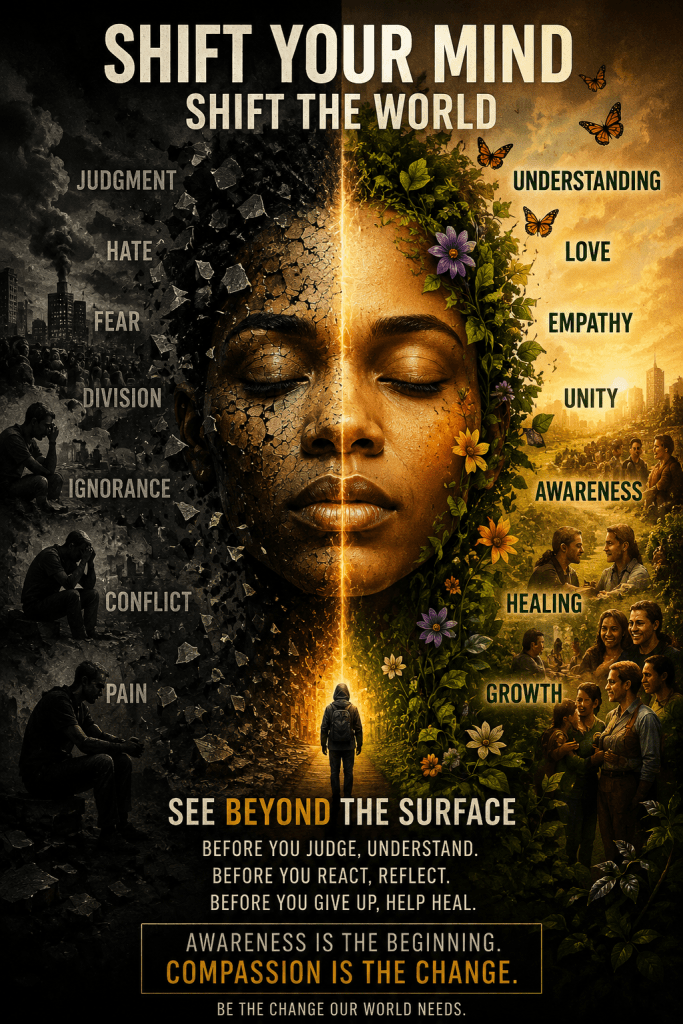
If we want a different world, it begins with how we show up in it. Let us learn to be the example we wish to see. Let us speak constructively and listen comprehensively. Let us debate without destroying, express without attacking, and choose understanding over assumption.

Life is full of opportunity. Every encounter, every interaction, is a reflection revealing something about our inner dialogue and our relationship with ourselves.

May you move through your days with gratitude.
May you find peace in the present moment.
And may you remember that the beauty of existence lives here now.

From Survival to Conscious Living

We are living in a time where awareness is no longer optional it is essential. As we continue to learn how the mind works, we begin to understand not only ourselves, but how we exist together as a species. Many of the challenges we face today do not stem from a lack of resources or opportunity, but from a lack of understanding about how our inner world shapes our outer reality.

One of the greatest obstacles to healthy coexistence is impulsive reaction. We often respond to one another without pausing, without questioning, and without curiosity. In those moments, communication breaks down. We identify actions at the surface level and assume intent, forgetting that no one truly knows what another human is carrying internally the emotions, memories, and pressures influencing their behavior.

Every interaction becomes a signal. Not something to attack, but something to observe. These moments reveal where we are growing and where unresolved patterns still live within us. This process isn’t easy, especially in real time. Most of us were never taught how to regulate emotion, process discomfort, or understand the mind’s survival mechanisms. Instead, we learned to suppress feelings, creating layers of tension that quietly restrict fulfillment and peace.

Through self-education and reflection, a simple truth becomes clear: we are a species of choice. Every choice we make carries a consequence, and how we emotionally interpret those consequences determines how we experience life. Our emotional state becomes the lens through which reality is perceived.

It is easy to blame systems, institutions, or other people for our struggles. But the deeper responsibility lies within perception itself. We are the ones receiving life through our internal filters. Awareness gives us the power to refine those filters to respond instead of react.

Habits and patterns are where everything begins. When we learn to pause, observe, and question rather than impulsively react, we reclaim agency. This is where real change happens not through force or control, but through understanding.

One realization stands out above the rest: if we cannot communicate, debate, or disagree without aggression or raised voices, we reach a limit in our evolution. Growth as a species requires calm dialogue, emotional regulation, and the willingness to listen even when perspectives differ.

The future does not demand perfection. It asks for responsibility. It asks for curiosity. It asks for compassion.

This journey is ongoing. I continue to learn. I continue to make choices some aligned, some challenging but each one offers insight. My intention is to walk this earth living vibrantly, learning from experience, and choosing awareness over fear.

If this reflection resonates with you, I invite you to share it. Let it be a reminder that we are not here to compete, dominate, or divide but to understand, connect, and evolve together.

We move forward not by fighting one another,
but by learning how to live together with clarity, presence, and care.

From Awareness to Practice

Awareness is the beginning, but it is not the end. Once we start to see how the mind operates—how habits, emotions, and reactions shape our experience—the real work begins in how we live that understanding day by day.

It’s one thing to recognize reactive patterns. It’s another to slow down when they arise. In the space between stimulus and response, we are given a choice. That space may feel uncomfortable at first, because it interrupts familiar behavior. But it is within that pause that freedom lives.

Many of our reactions are not responses to the present moment—they are echoes of the past. Old memories, unprocessed emotions, and learned defenses surface quickly, convincing us that urgency is necessary. When we act from this place, we aren’t choosing consciously—we are repeating. And repetition without awareness becomes limitation.

Learning to respond requires patience with ourselves. It means allowing discomfort without immediately fixing, blaming, or projecting. It means listening—not only to others, but to what is happening internally. This is where emotional intelligence begins to replace emotional reflex.

As individuals, we often want immediate resolution. As a species, we’ve been conditioned to seek speed over depth. But healing, understanding, and growth do not move on timelines dictated by pressure. They move at the pace of honesty and presence.

This is why communication matters so deeply. When we speak without listening, we create division. When we listen without defensiveness, we create space. Conversation becomes connection when the goal is understanding rather than winning.

The future of our collective well-being does not depend on uniform thinking—it depends on our ability to coexist with difference without hostility. This requires self-regulation, curiosity, and humility. It requires the willingness to say, “I don’t fully understand yet.”

Change does not begin with institutions. It begins with individuals who are willing to examine themselves. When enough people choose responsibility over reaction, the collective naturally shifts.

So the invitation continues:
Practice the pause.
Observe without judgment.
Respond with intention.

This is not about perfection. It’s about progress. And progress happens quietly, moment by moment, choice by choice.

We are still learning.
And that is exactly where growth begins.