These principles are guidelines for inner peace because they foster healing, acceptance, self-love, honesty, emotional openness, and trust in the universe’s flow. Each principle encourages us to release past hurts, embrace our authentic selves, and navigate our emotions healthily. By promoting self-awareness and compassion, they help us form positive relationships with ourselves and others, allowing us to face life’s challenges with resilience and tranquility. These guidelines, when practiced consistently, lead us towards a path of inner peace and fulfillment.
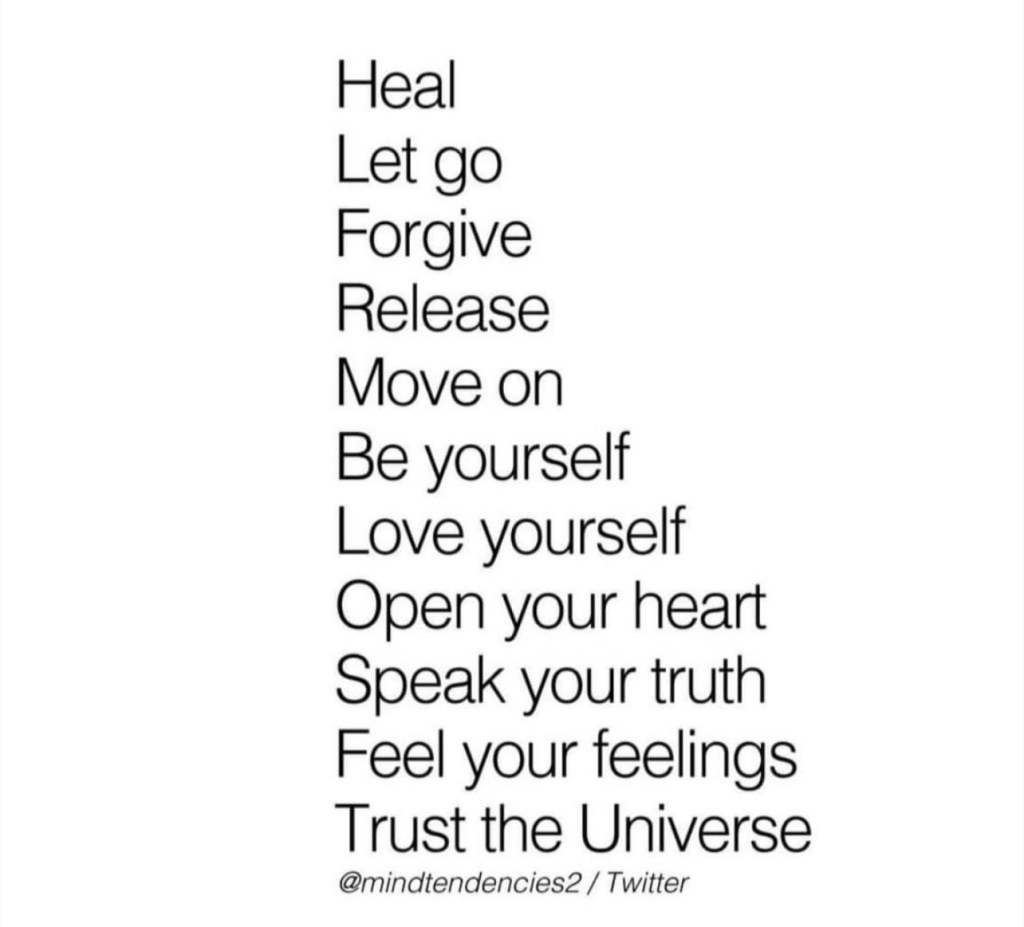
Heal: Healing means accepting and working through past wounds or traumas. It’s a process of understanding, acknowledging, and releasing past pain, allowing for personal growth and emotional wellbeing.- Let Go: To let go is to release attachment to past hurts, resentments, and fears. It’s about acknowledging what happened without allowing it to hold power over your present and future.
- Forgive: Forgiveness is about letting go of anger and resentment towards others or yourself. It does not necessarily mean forgetting or condoning the actions, but rather freeing yourself from the burden of holding onto the pain.
- Release: Releasing is similar to letting go, but it also refers to releasing pent-up emotions, thoughts, or energy. By expressing or releasing these, you allow space for peace and positive emotions.
- Move On: Moving on involves accepting what has happened and making the conscious decision to progress past it. It’s about not letting your past define your future.
- Be Yourself: This means embracing and accepting who you are, including your strengths, weaknesses, quirks, and experiences. It’s about living authentically and not trying to fit into someone else’s expectations or molds.
- Love Yourself: Self-love involves treating yourself with kindness and respect, acknowledging your self-worth, and taking care of your physical, emotional, and mental wellbeing.
- Open Your Heart: Opening your heart refers to being open to love, connection, and vulnerability. It involves opening yourself up to give and receive love and to connect with others authentically.
- Speak Your Truth: Speaking your truth means expressing your feelings, thoughts, and experiences honestly and openly. It’s about being true to yourself and your experiences, and communicating that to others.
- Feel Your Feelings: This means allowing yourself to experience your emotions fully, without judgement or suppression. It’s about acknowledging and accepting your feelings as valid and important.
- Trust the Universe: Trusting the universe involves having faith that things happen for a reason and that everything, in the end, will work out as it should. It’s about trusting in the process and flow of life, even if you don’t understand it at the moment.
These are the pillars of existing in peace, as they cultivate a sense of inner tranquility and promote emotional wellbeing. They help us manage our responses to life’s challenges, allowing us to navigate life with greater ease, resilience, and peace. These practices encourage emotional healing, self-awareness, and the development of a positive relationship with oneself and others. In turn, these form the foundation for a peaceful and fulfilled life.
 NO LABELS JUST HUMAN